
get to know us
About ARCNL
ARCNL, the Advanced Research Center for Nanolithography, is a public-private research institute that studies the fundamental physics and chemistry of nanolithography. The research conducted at ARCNL, inspired by ongoing challenges in the semiconductor industry, generates new scientific insights while contributing to future technological developments.
ARCNL is a partnership between the Dutch Research Council (NWO), the University of Amsterdam, Vrije Universiteit Amsterdam, the University of Groningen, and ASML. It is part of NWO-I, the institutes organization of NWO.
Our motivation
Our modern world runs on computer chips. They’re in our phones, our cars, our payment systems and more. Nanolithography technology is used to print chips that pack the most computing power in the smallest sizes, putting it at the cutting edge of nanoscale physics and engineering. Further developing this technology and pushing the limits of size and precision are needed to advance computing power and efficiency, especially with the rise of artificial intelligence and the data centers that power it.
To achieve this, we combine advanced physics with insights from chemistry, biology, engineering, and materials science. Our work sits at the interface of fundamental discovery and real-world applications, carried out in close collaboration with universities, research institutes, and industrial partners.
Driven by Moore’s law, lithography technology touches frequently on fundamental limits. Consequently, ARCNL researchers often find themselves working with extraordinary scientific challenges. ARCNL not only contributes to future technological developments but is also in a position to bridge the connection between discovery and possible application.
ARCNL performs fundamental research on the physics and chemistry of nanolithography, inspired by ongoing challenges in the semiconductor industry.
Public-private partnership
ARCNL is a public-private partnership established in 2014 by the Dutch Research Council (NWO), the University of Amsterdam (UvA), Vrije Universiteit Amsterdam (VU) and semiconductor equipment manufacturer ASML. In 2022 the University of Groningen (RUG) joined as associate partner. To strengthen university partnerships, all ARCNL group leaders hold a faculty position at one of our partner universities.
The institute is located at Amsterdam Science Park and is one of the 10 NWO national research institutes across the Netherlands. This positioning helps make collaboration and partnership a core part of ARCNL research.
AMOLF-ARCNL-ASML PhD program
ARCNL frequently collaborates directly with neighboring institute AMOLF, for example via a joint AMOLF-ARCNL-ASML PhD program. In this program, promising PhD candidates work with supervisors from all three organizations on research driven by both fundamental curiosity and real-world applications.
Our research
ARCNL conducts fundamental research into the fundamental physics and chemistry of nanolithography, inspired by ongoing challenges in the semiconductor industry.
Our 11 research groups explore different aspects of this technology and are organized into three departments: Source, Metrology, and Materials.
Source investigates the fundamental physics behind generating extreme ultraviolet (EUV) light, including plasma and fluid dynamics, laser physics, ion interactions, and the atomic origins of EUV light.
Metrology develops new principles and techniques for imaging and precision measurement, including methods for visualizing structures at the nanoscale.
Materials investigates the behavior and properties of materials, surfaces, and interfaces under the demanding conditions of advanced lithography.
Diversity, equity and inclusion
At ARCNL, we know that the best science comes from collaboration between people of diverse backgrounds and perspectives.
Our institute is highly committed to fostering an inclusive environment that is equally safe and fair for all employees and visitors.
It is therefore important that we all contribute to an inclusive culture, where it is normal to give each other feedback in an atmosphere that is perceived as open and safe.
Governance
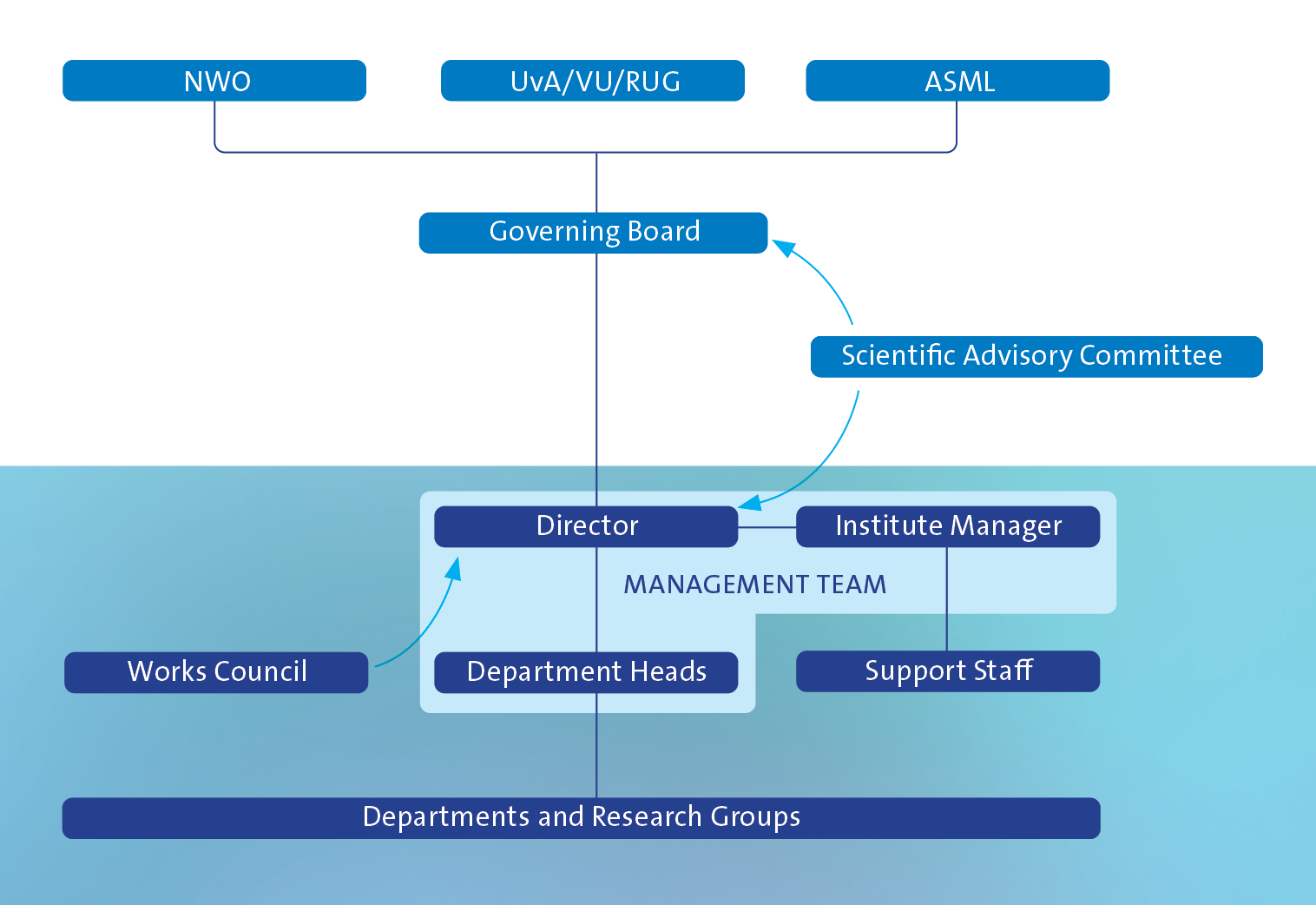
The ARCNL Management Team (MT) consists of its director, Professor Marcelo Ackermann, institute manager Dr. Marjan Fretz, and representatives of the three research departments: Professor Oscar Versolato (Source department), Dr. Peter Kraus (Metrology), and Dr. Roland Bliem (Materials).
The Governing Board is composed of representatives of the partners of ARCNL. It is responsible for the overall supervision of ARCNL and the director, and acts as decision making body.
The Scientific Advisory Committee (SAC) provides advice to the Governing Board and the ARCNL director concerning ARCNL’s scientific research strategy and research program. The members of the SAC are all internationally renowned researchers with strong expertise in research fields relevant to ARCNL. The SAC visits ARCNL yearly as part of the annual strategy cycle involving all stakeholders.
- Prof. dr. Jan de Boer, chairperson of the ARCNL Governing Board, Member of the Executive Board of the Dutch Research Council (NWO)
- Prof. dr. Aletta Kraneveld, Dean of the Faculty of Science at VU University Amsterdam
- Prof. dr. Hans Hilgenkamp, Scientific director MESA+ institute of the University of Twente; member on behalf of NWO
- Prof. dr. Moniek Tromp, Director Zernike Institute for Advanced Materials, University of Groningen
- Prof. dr. Mark Golden, Institute of Physics, University of Amsterdam
- Richard Kemkers, Head of ASML Research
- Prof. dr. Sjoerd Verduyn Lunel, Senior Strategy Manager ASML
The secretary of the ARCNL Governing Board is Ella Bosch.
- Dr. Emily Gallagher (principal member of technical staff at IMEC, Leuven, chair)
- Prof. Gareth Parkinson (professor at Technische Universität Wien, Austria)
- Prof. Catarina Vozzi (research director of CNR IFN, Milan, Italy)
- Prof. Aleksei Kimel (director of IMM, Radboud University Nijmegen)
- Prof. Stefan Schippers (professor at Justus-Liebig-Universität Giessen)
Facilities
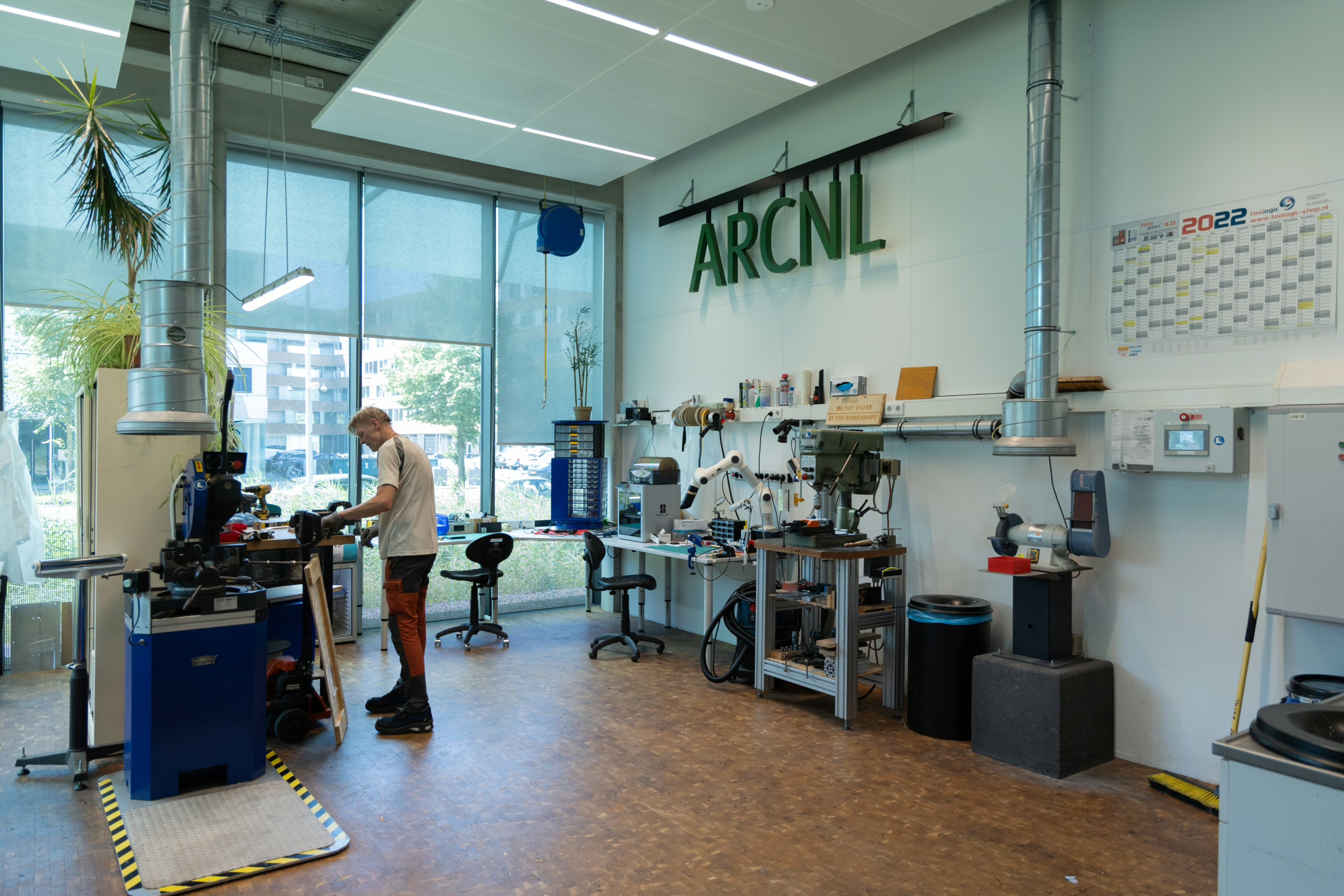
For exploring novel fields of research, our researchers need unique advanced equipment, electronics, and software that often cannot be obtained commercially. Therefore, this is specially designed and made by our technical support staff.
Research group technicians have access to dedicated workshop space for building and adapting scientific equipment. ARCNL researchers and technicians are further supported by technical facilities and support staff shared with neighboring institute AMOLF.
For more information about shared facilities, visit the AMOLF website.
A brief history
In 2013, the year before ARCNL’s founding, ASML issued a tender for proposals for an independent research center. The company wished to establish a research institute to help them access fundamental knowledge related to long-term challenges connected with Moore’s law – that is, to be able to continue developing ever smaller, more powerful computer chips.
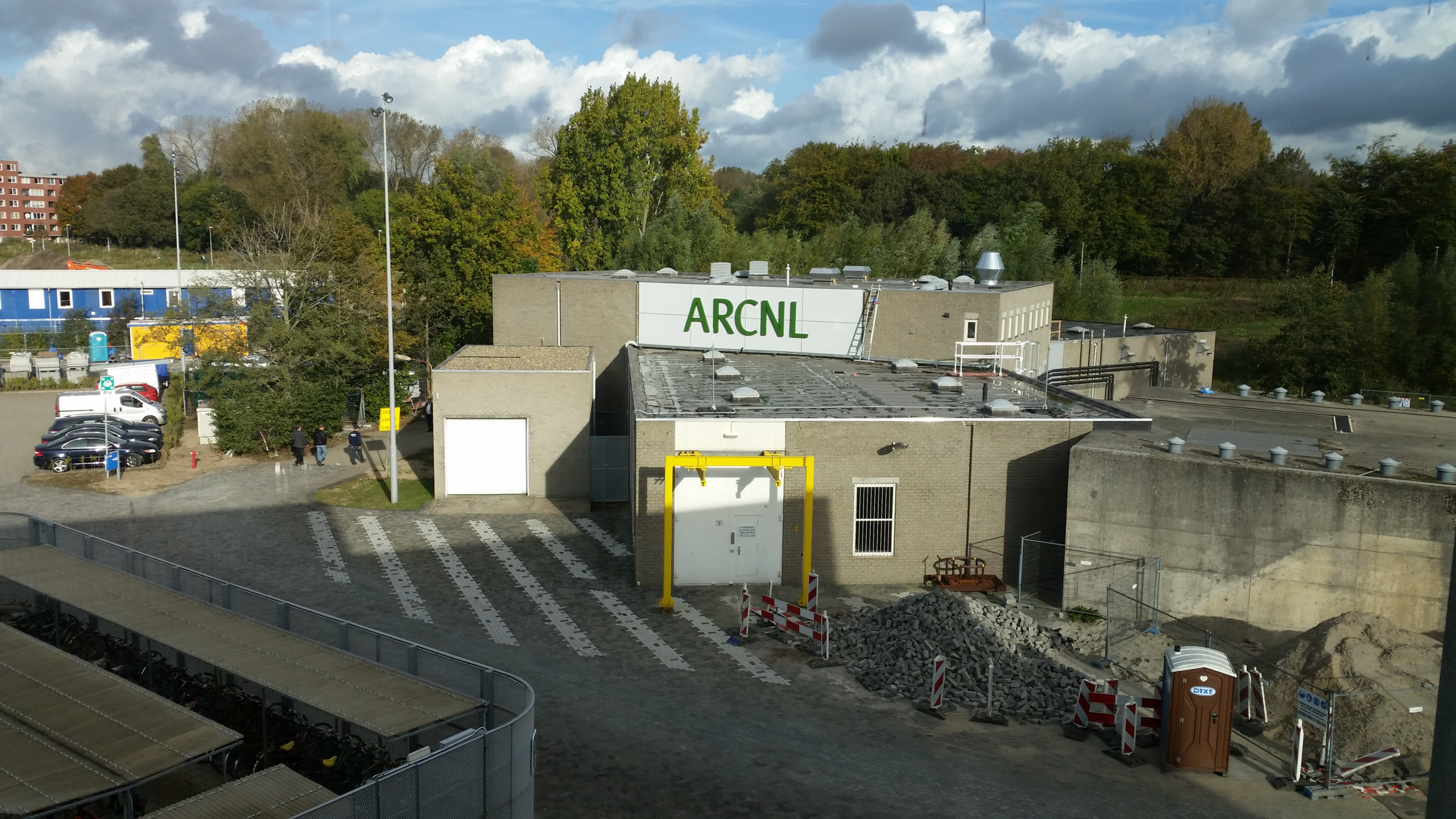
A group of Amsterdam-based research organizations came up with the winning bid. ARCNL began as department of the institute AMOLF. In 2015, ARCNL continued as an independent research institute, and in 2019 the institute moved to its long-term housing, the Matrix VII building, also located at the Amsterdam Science Park.
Get involved
Contact us
Do you have any questions about ARCNL? Get in touch with us via email at info@arcnl.nl or by phone at +31 (0)20 8517100.