Source
EUV Plasma Processes

About
In this group we investigate the fundamental physics that underpins the generation of extreme ultraviolet (EUV) light from laser‑driven tin plasmas. Through detailed, physics‑driven research, we aim to deepen the scientific understanding of EUV plasma sources and support the development of next‑generation nanolithography technologies.
Research focus
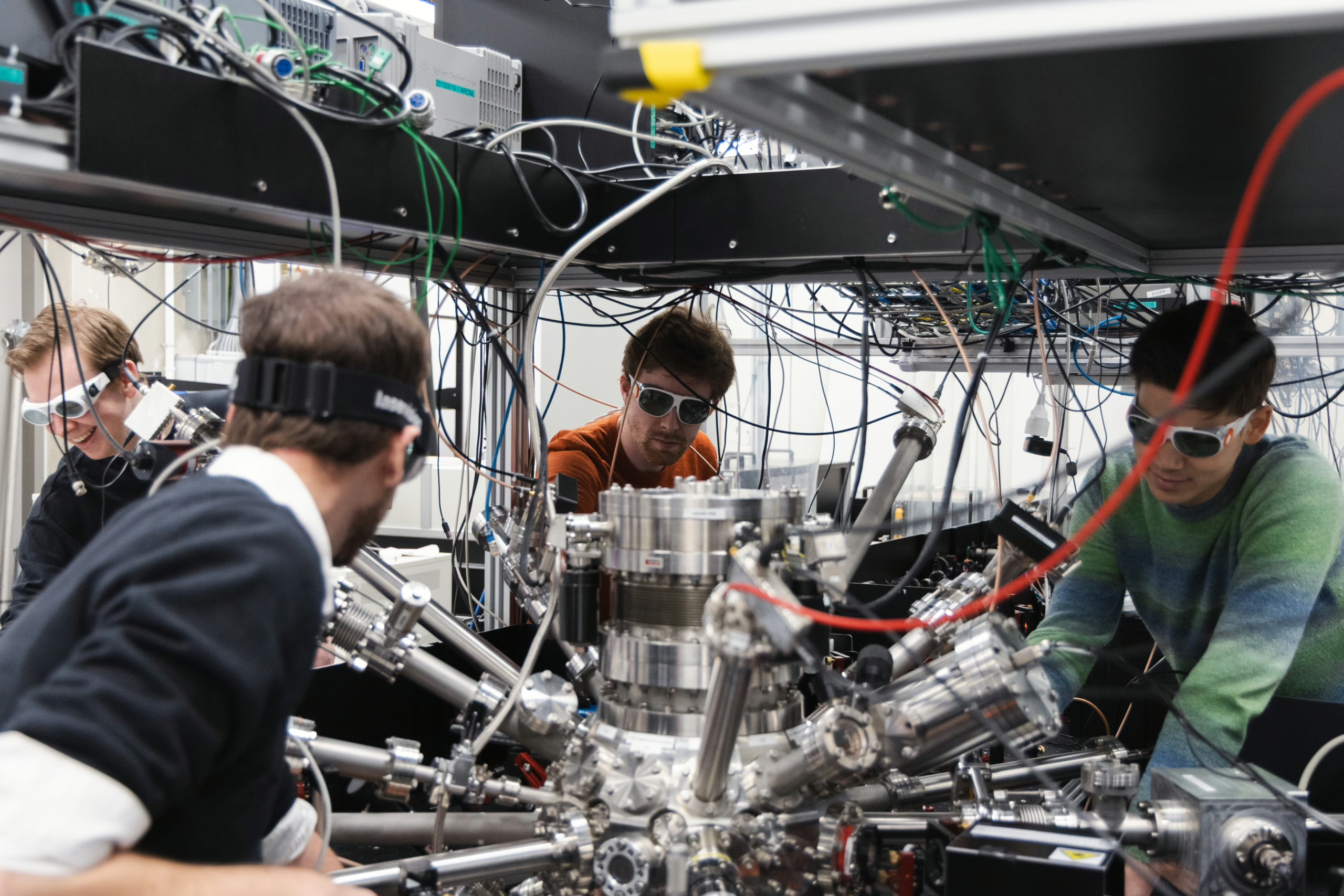
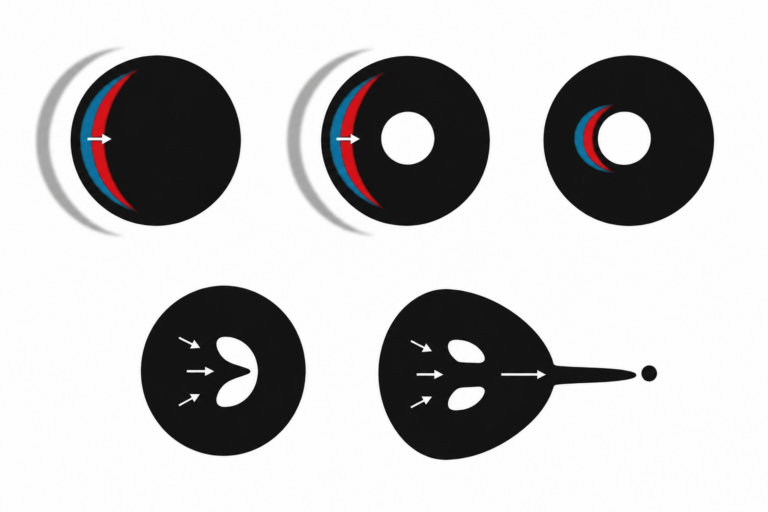
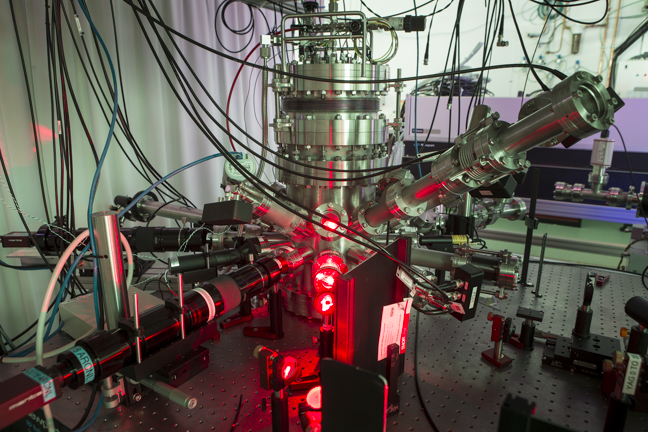
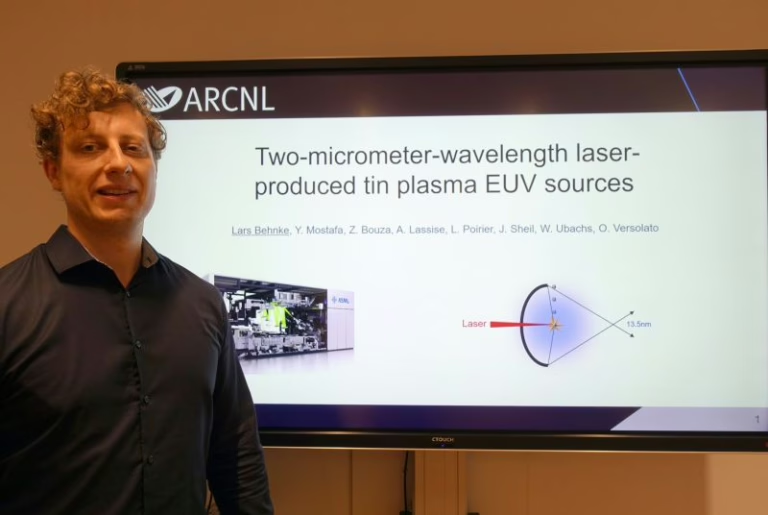
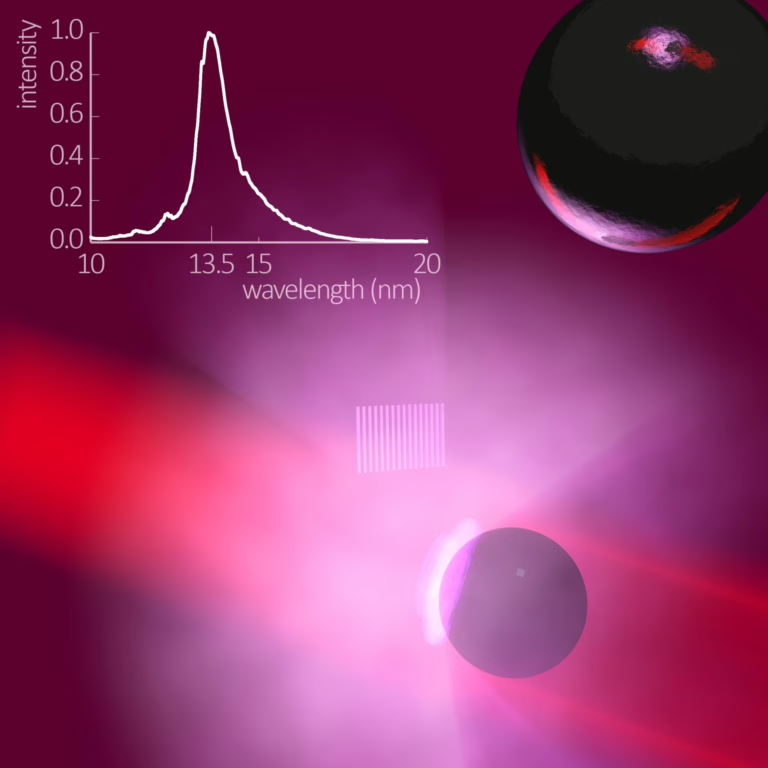
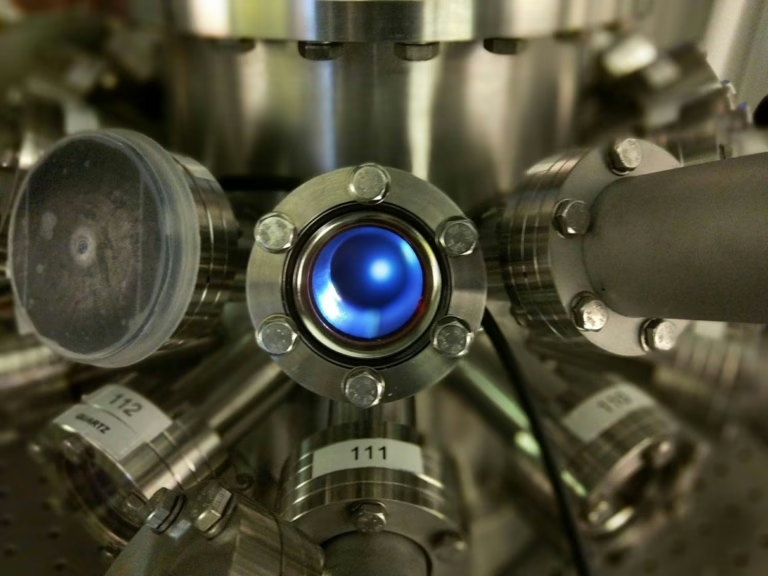
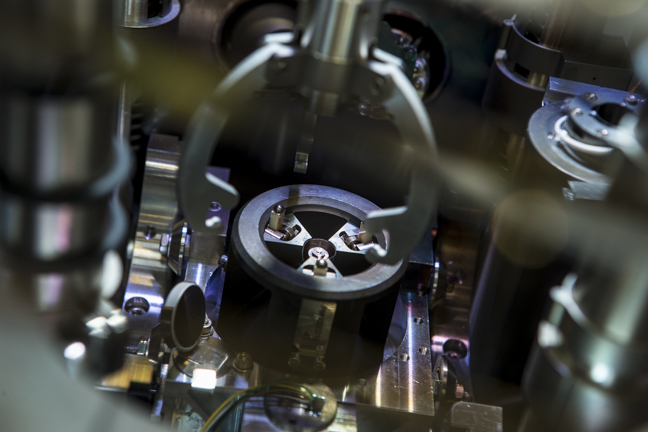
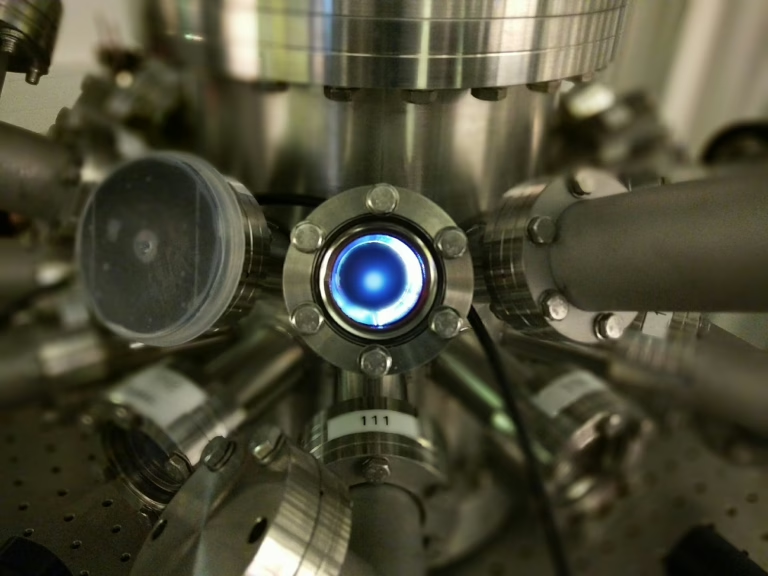
This group uses an extensive set of state‑of‑the‑art diagnostics to study EUV‑emitting tin plasmas at the atomic and hydrodynamic level. EUV light is essential in today’s most advanced lithography systems for semiconductor manufacturing. In these systems, EUV light is produced by directing two carefully timed laser pulses onto a droplet of liquid tin – first shaping it, then transforming it into a hot, dense plasma that emits EUV radiation at 13.5 nm.
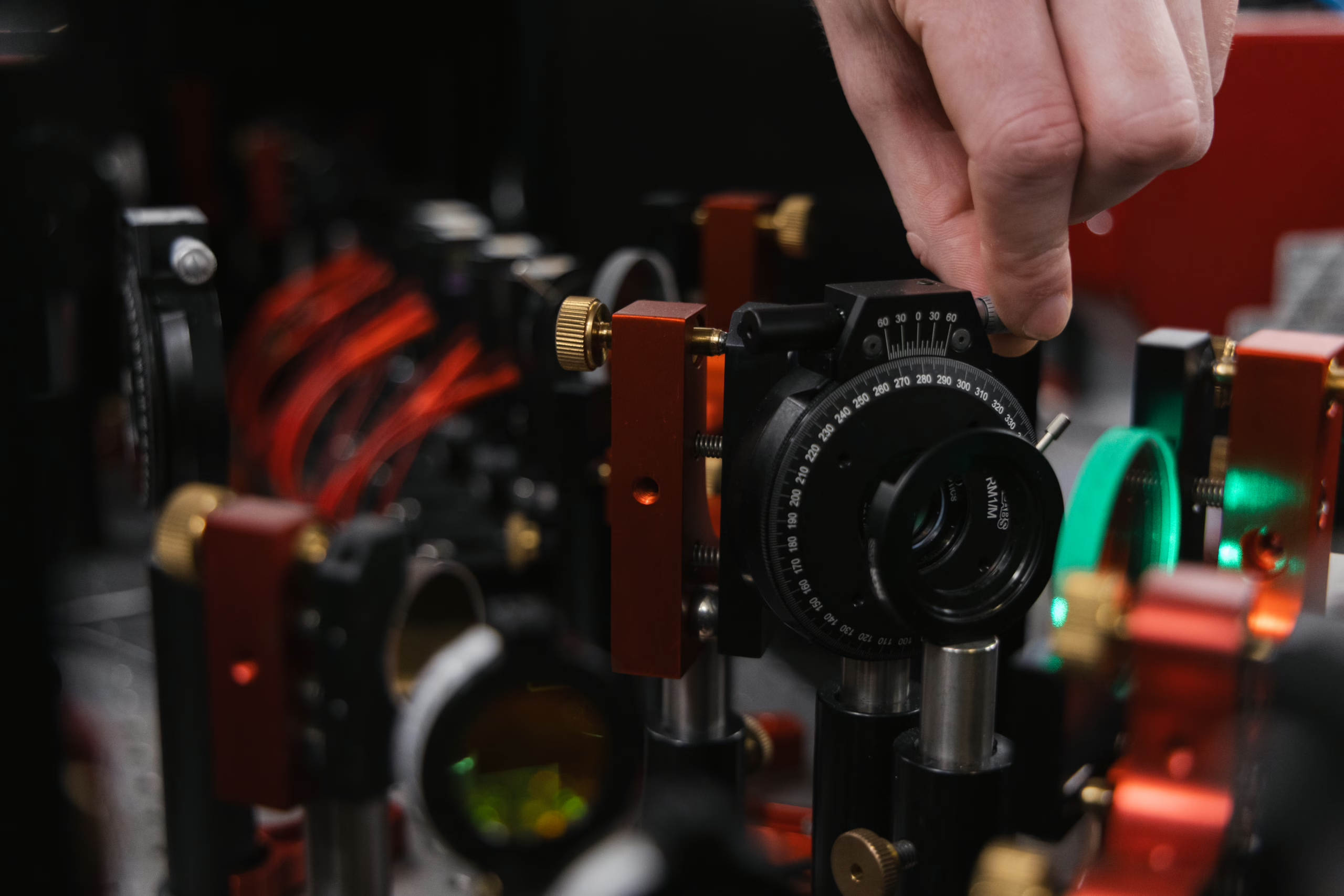
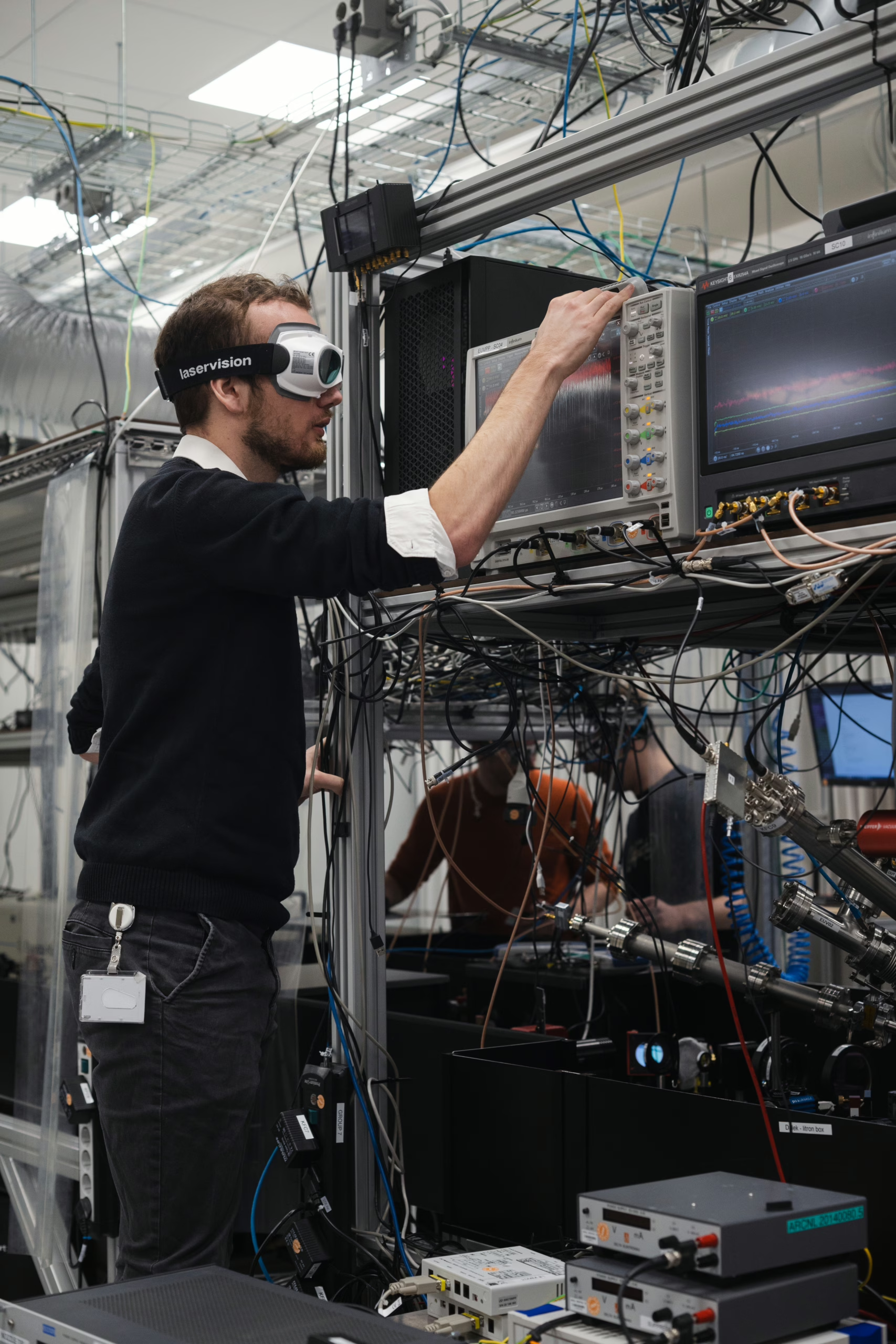
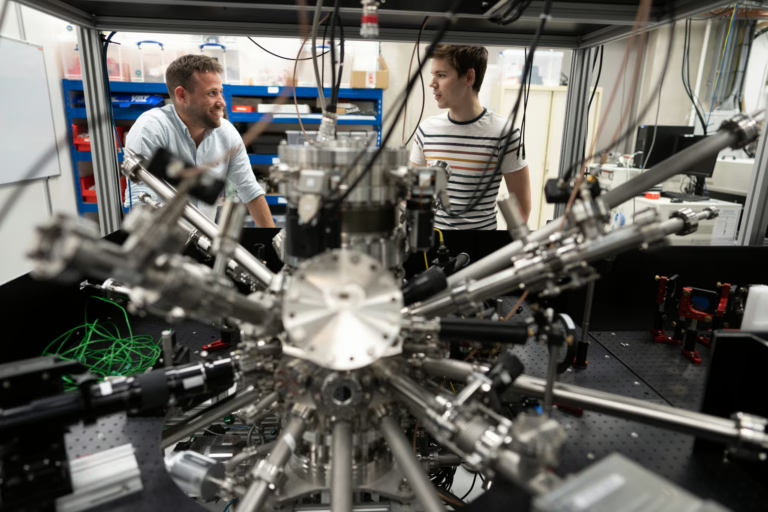
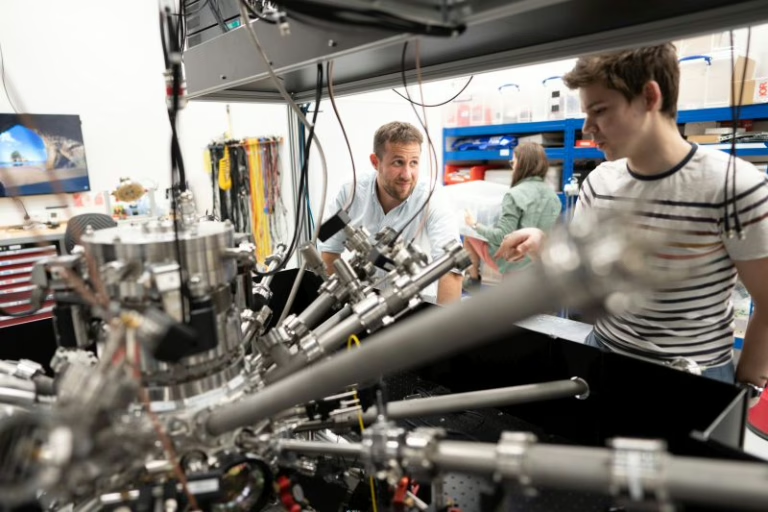
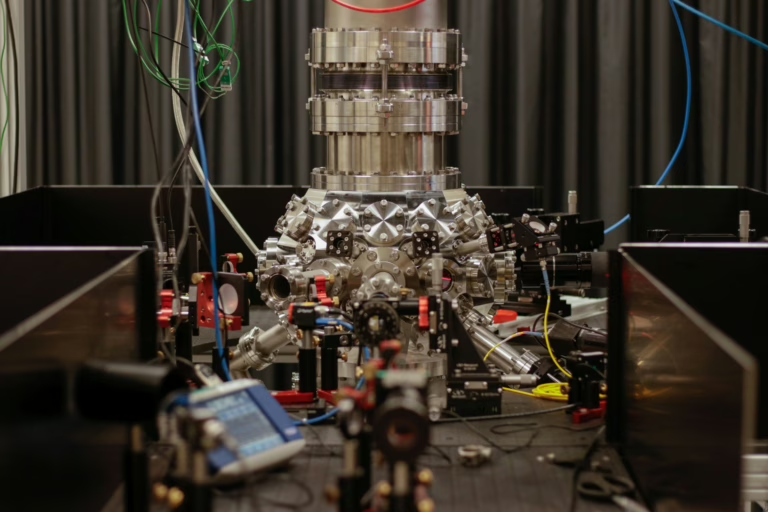
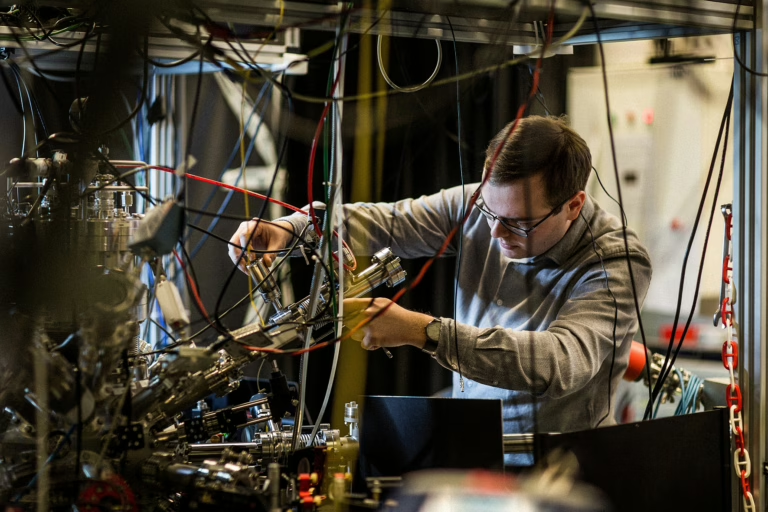
Our research spans the full sequence of physical processes involved in this conversion. Our experiments combine high‑power pulsed lasers, microscopic liquid‑tin droplets, and advanced vacuum and diagnostic systems.
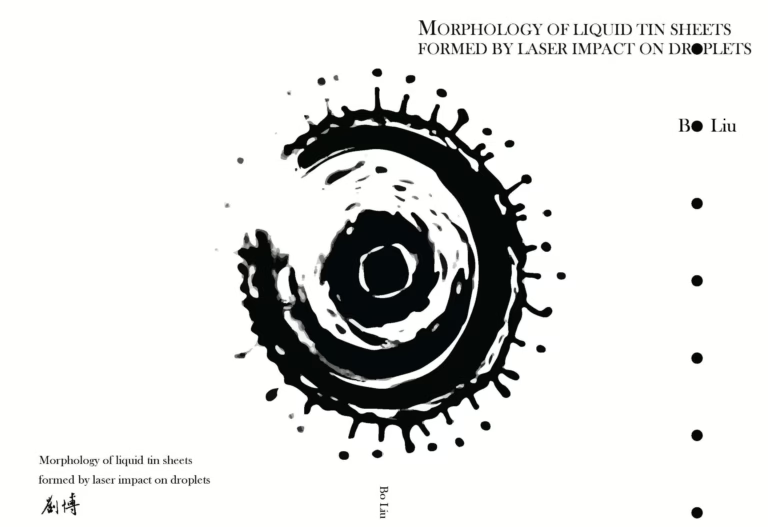
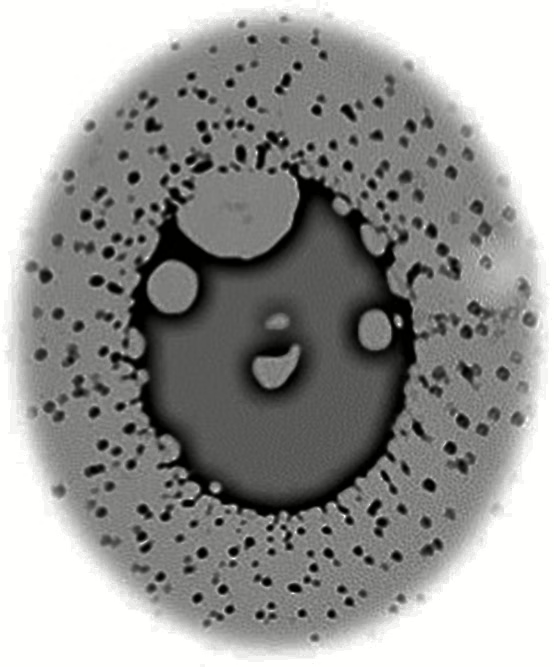
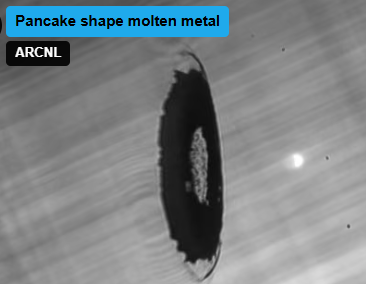
The first laser pulse reshapes the droplet through a very short, impulsive force. Within only 10 nanoseconds, the droplet accelerates from rest to roughly 100 m/s, spreading into a thin sheet. Controlling the hydrodynamics of this expansion is crucial because the shape and stability of the tin sheet strongly influence the efficiency of EUV light generation.
Using high‑speed photography techniques such as shadowgraphy, we visualize and analyze these deformation dynamics with nanosecond temporal resolution. These studies not only refine our understanding of EUV source physics but also shed light on broader questions in fundamental fluid dynamics under extreme conditions.
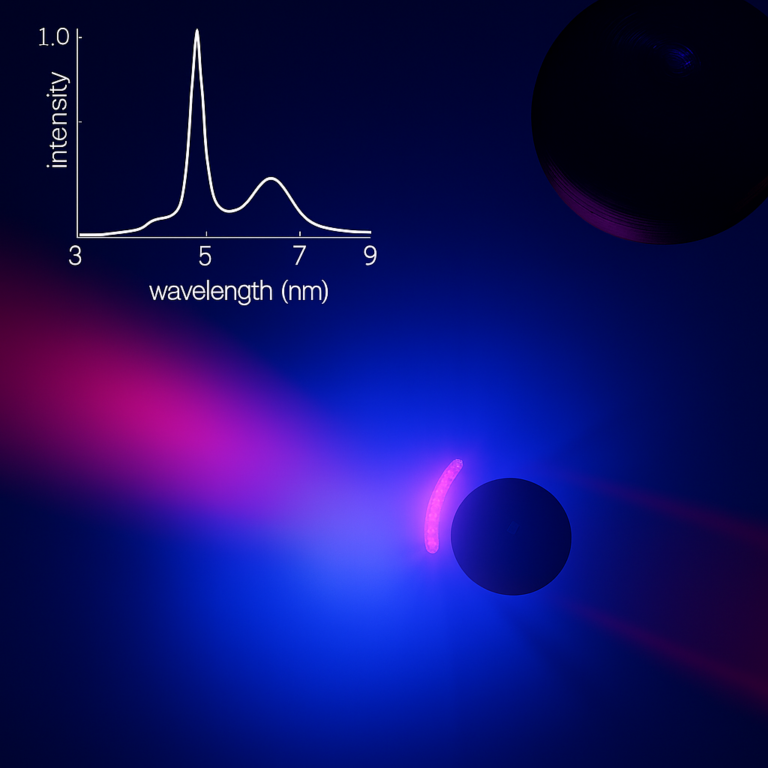
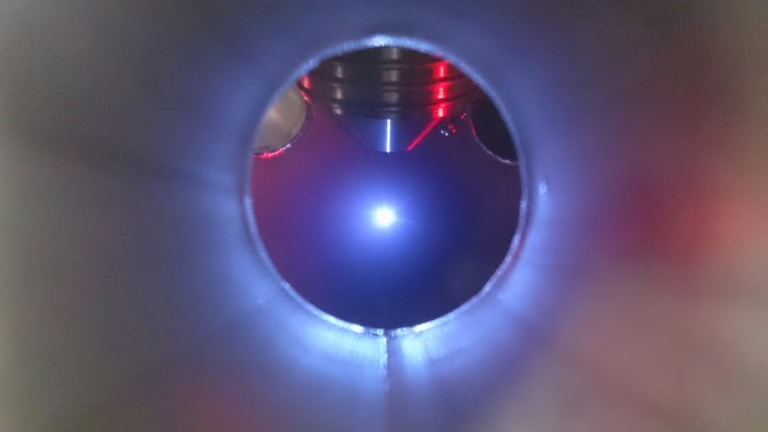
When the second laser pulse strikes the pre‑shaped tin target, it produces a high‑temperature, high‑density plasma – the fourth state of matter. In this environment, tin atoms can lose 12 or more electrons, creating a complex mixture of highly charged ions. Each charge state emits EUV radiation in a specific spectral “fingerprint,” and the combined signal forms the rich and intricate spectrum characteristic of EUV sources.
We employ advanced visible‑light and EUV spectroscopy to determine which ions are present, in what quantities, and how these evolve in space and time. Our goal is to link specific atomic processes to distinct spectral features, ultimately enabling more efficient and better‑controlled EUV light generation.
In addition to light emission, the plasma expands violently: highly charged ions can be ejected at speeds up to 50 km/s. By characterizing these ion kinetic‑energy distributions, we aim to understand the underlying acceleration mechanisms and improve plasma‑source performance.
Together, these diagnostics provide a comprehensive, physics‑based picture of the plasma, informing the design of future high‑brightness EUV sources.
We are also working towards sources of even shorter-wavelength light, beyond EUV (BEUV) to enable the ever-continuing miniaturization of semiconductor devices, making them ever smaller, smarter, and more energy efficient.
Group members
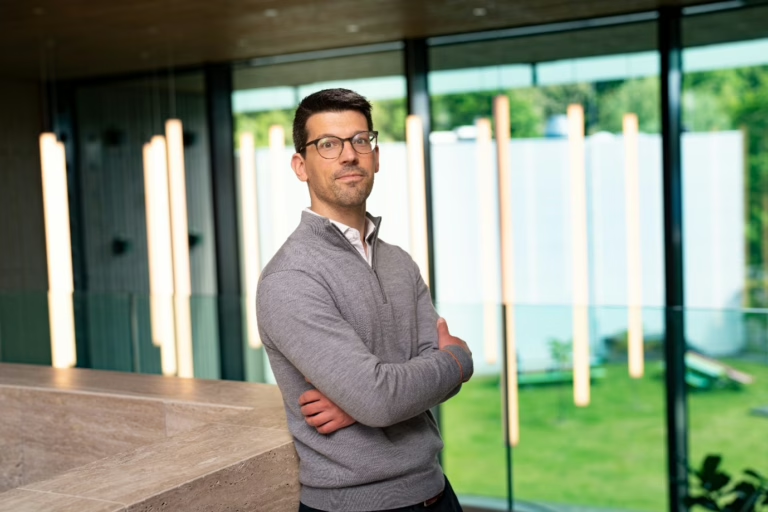
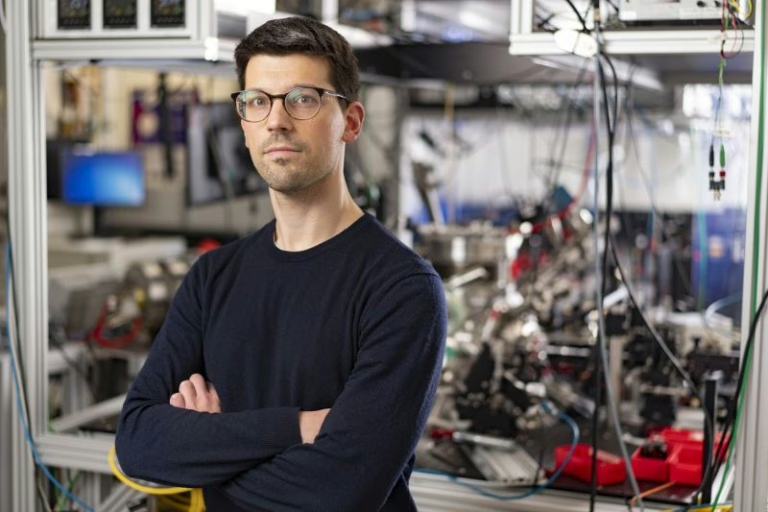
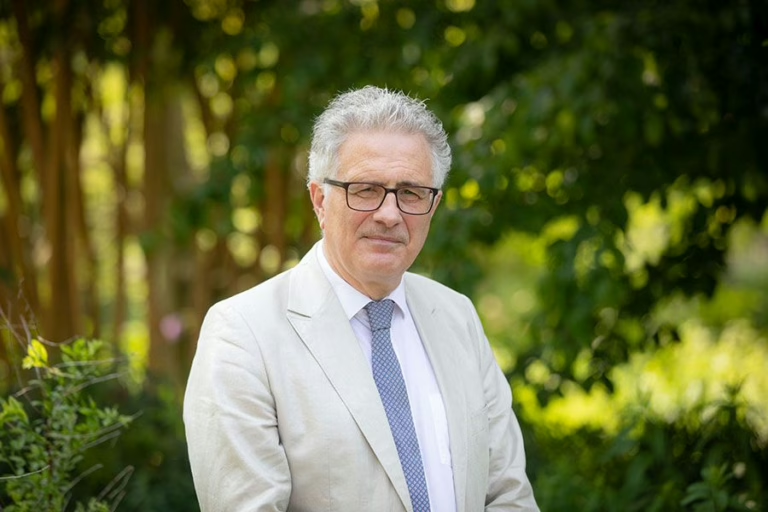
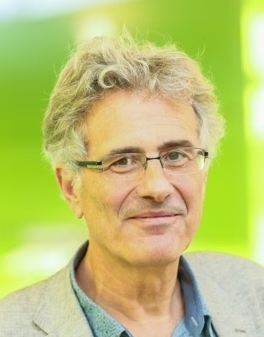
Oscar Versolato began his work at ARCNL as a postdoctoral researcher in 2014 and established the EUV Plasma Processes experiments from the ground up. He has led the group since 2017. In addition, he serves as Head of the Source Department at ARCNL and since 2025 is a Full Professor at Vrije Universiteit Amsterdam.









Latest news


Most recent publications