Léo Guery, September 9
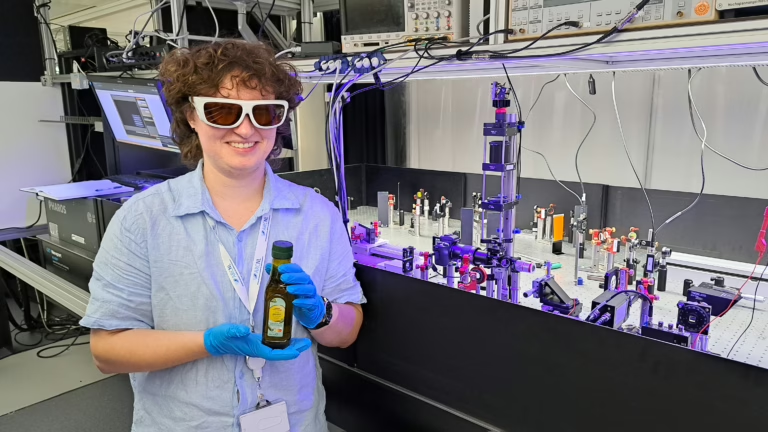
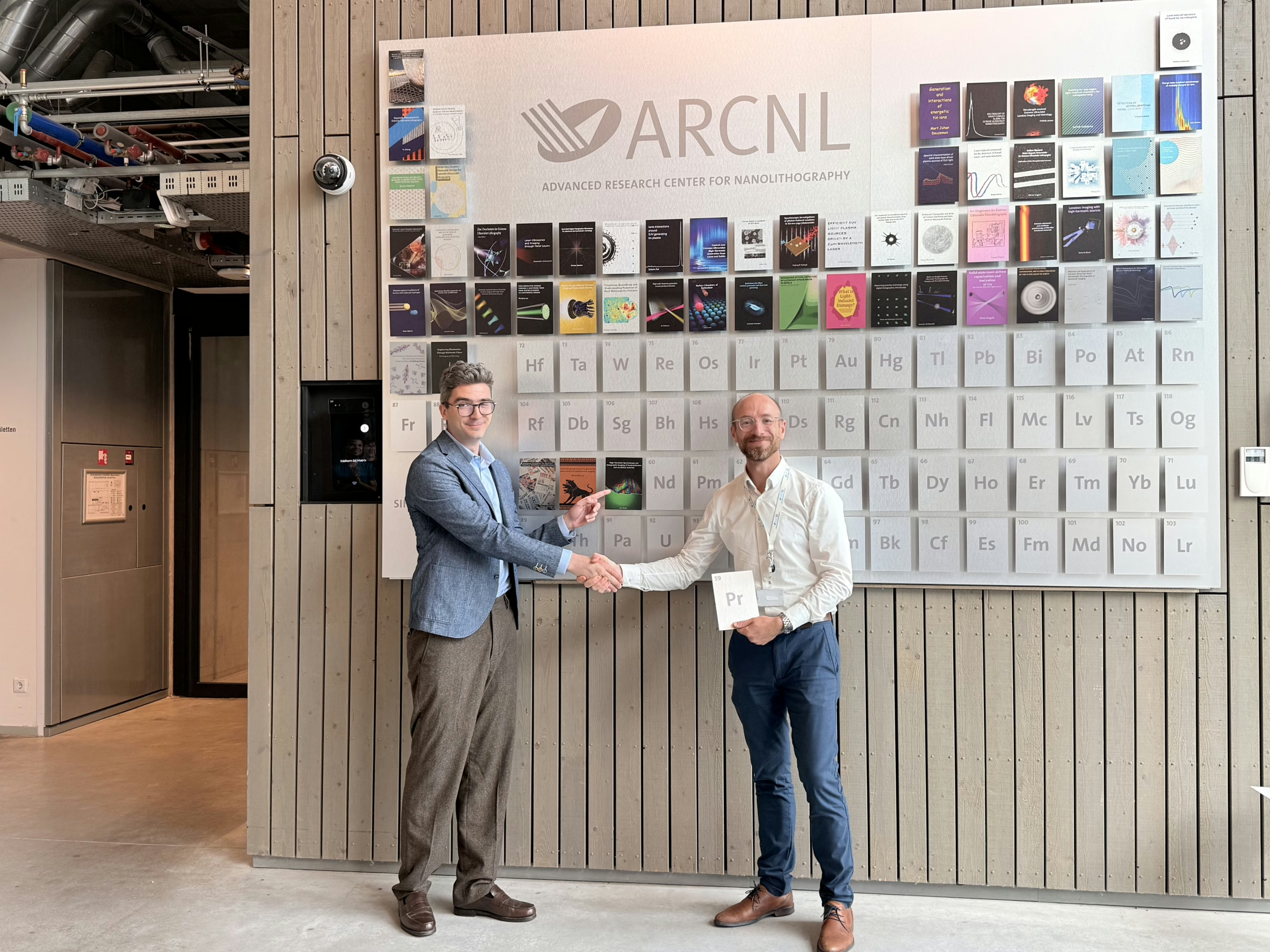
Léo’s thesis, supervised by Peter Kraus, is titled “High-harmonic spectroscopy and holographic imaging of semiconductors and correlated materials.”
In it, he details his work developing techniques for studying semiconductor materials using high-harmonic generation, the nonlinear interaction of intense laser light with a material to produce higher frequencies of light.
By analyzing the high-frequency light that comes out of this process, you can gather information about the inner structure of the material.
Léo’s work applies this idea to both the study of internal material processes, such as phase transitions, and to high-resolution metrology techniques such as phase-sensitive imaging.
This makes his findings interesting for both materials science research and applications in semiconductor device manufacturing.
For Léo, the challenges that come with doing experimental research were not just obstacles, but also gave him new directions to explore.
“What I respect about Léo is that even when things were difficult, he always managed to extract something meaningful from the chaos,” shares Peter. “He has a real talent for finding the essential signal in the noise, and finding alternative paths that still lead somewhere useful.”
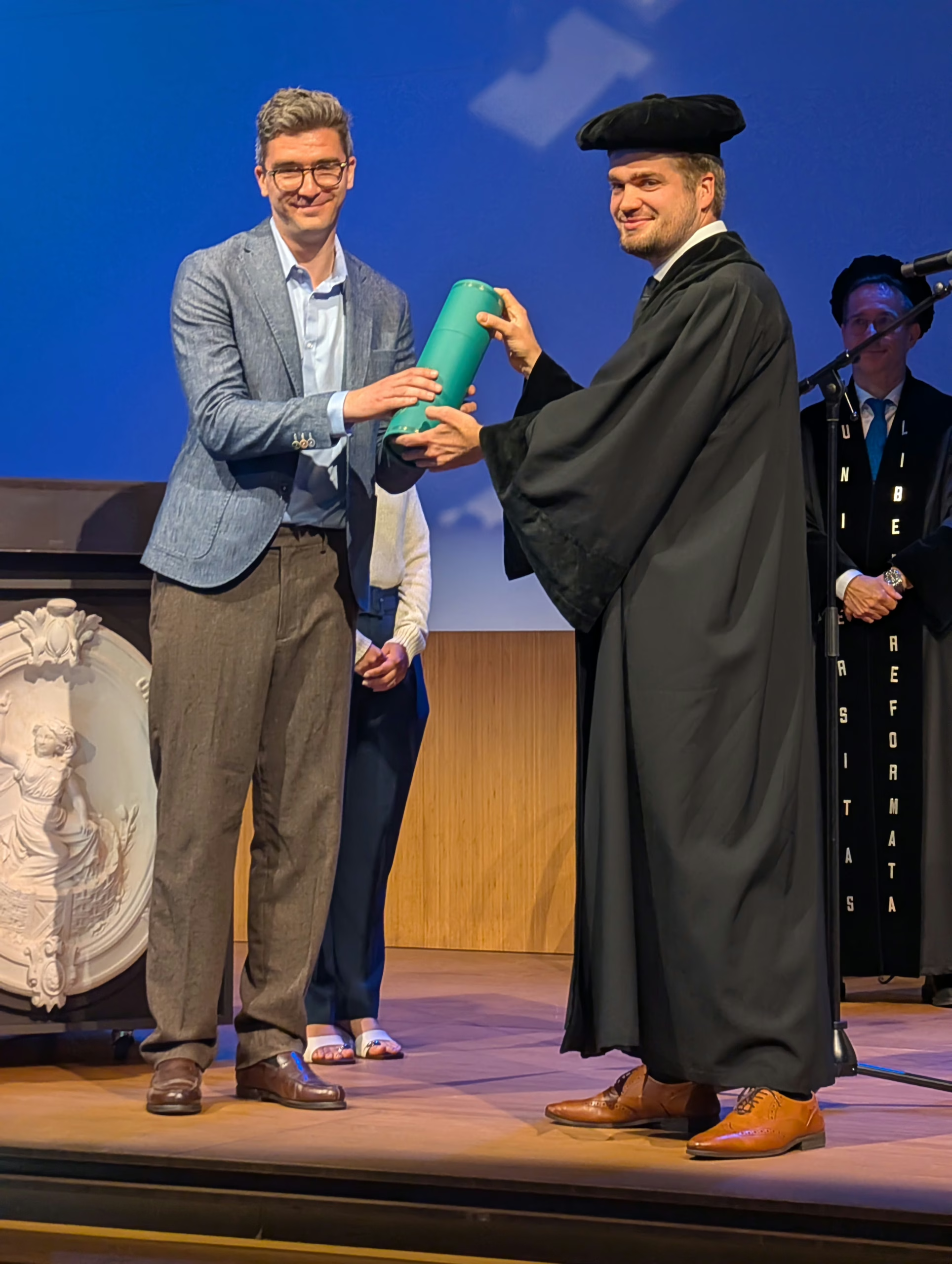
Now, Léo is a postdoctoral researcher at the National Research Council Canada in Ottawa. Congratulations on this achievement and exciting next chapter, Léo!
Luc Assink, September 29
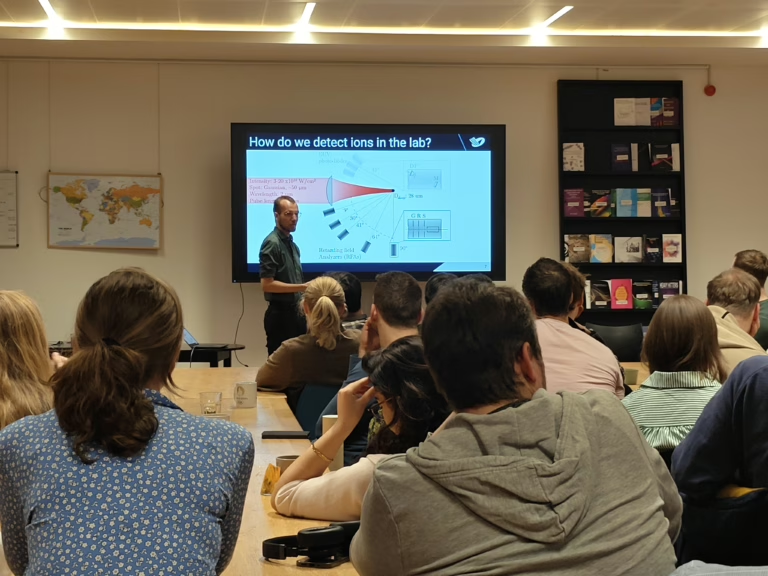
Luc conducted his doctoral research as part of ARCNL’s Ion Interactions group led by Ronnie Hoekstra, based at the University of Groningen.
His thesis, titled, “Heavy Hitters: Interactions of tin ions from EUV source plasma,” explores different types of ion interactions relevant in extreme ultraviolet (EUV) light sources for nanolithography.
Luc’s work looks at both the ion interactions themselves and how best to measure them.
This involved a lot of work on instrumentation, such as particle detectors.
Fittingly, Luc included this proposition in his thesis: “Every experimental physicist should at least once be tricked by a detector.”
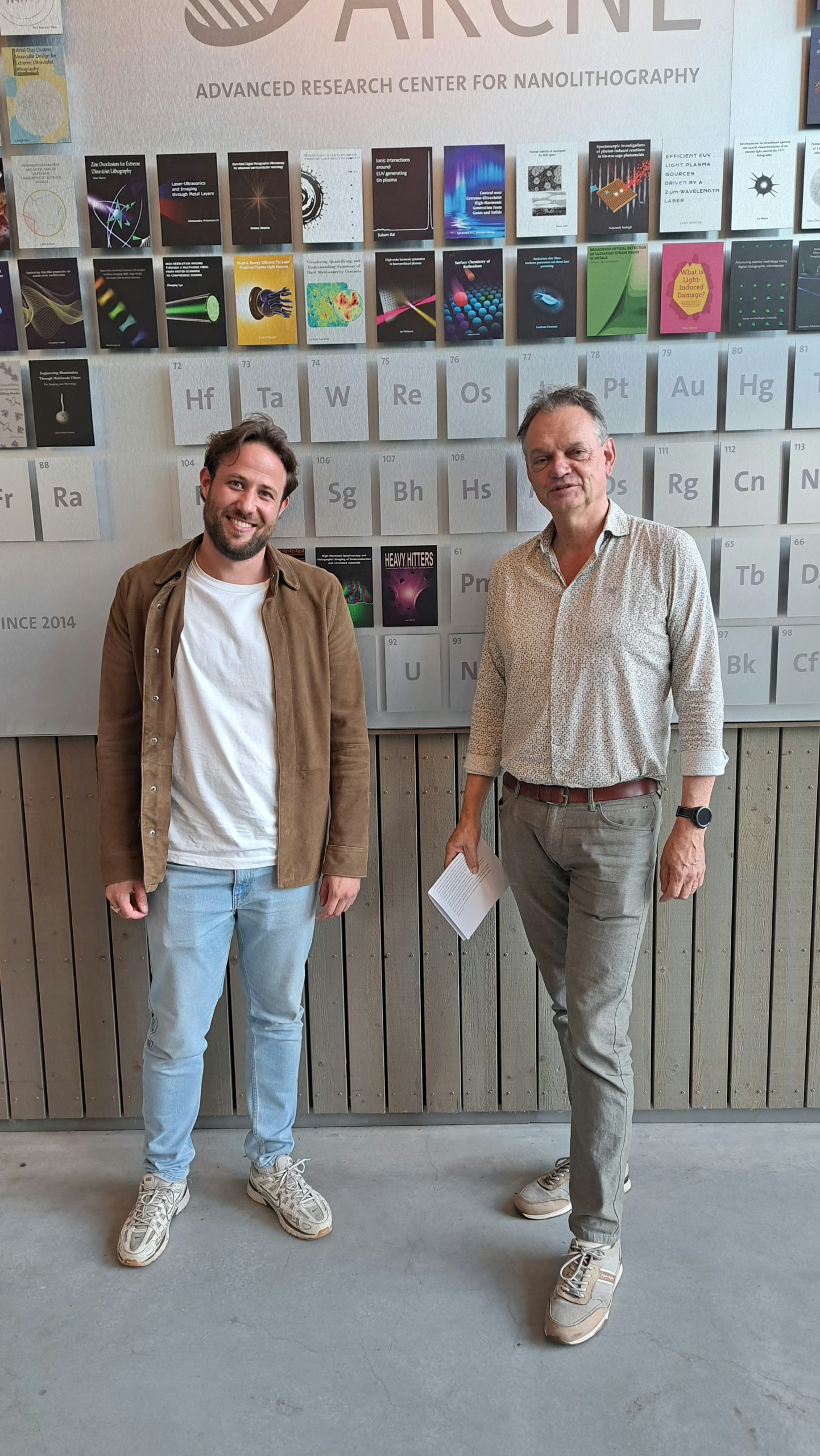
As a member of the ARCNL group based in Groningen, Luc’s experience was a bit different from those based in Amsterdam.
“Still, visiting Amsterdam always felt very natural to me,” says Luc, “and I always fully felt I was part of the ARCNL community. I look back on my time at ARCNL with great pleasure.”
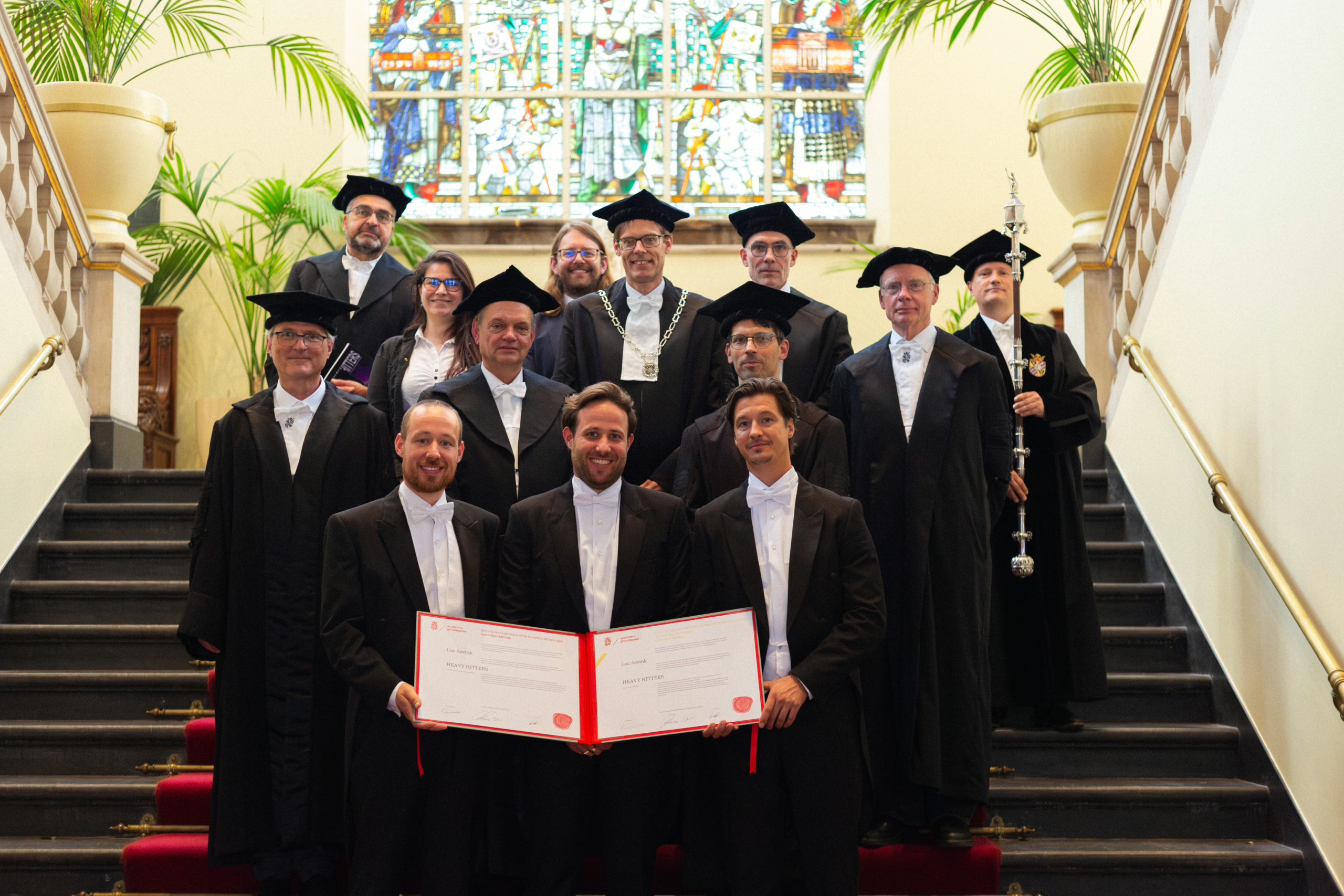
Luc’s work in the group has taken steps toward a more complete atomic-scale description of ion interactions in tin plasmas. However, there is still more to explore, and Luc feels that his research isn’t finished yet.
“After four years of research, I had plenty of ideas for experiments I would like to pursue next,” he says. “Fortunately, I was able to continue as a postdoctoral researcher in the same group!”
Learn more
Curious about a PhD at ARCNL? Explore opportunities on our Careers page.